
News
Modern Fleet Risk: What’s Changed and What to Do Next
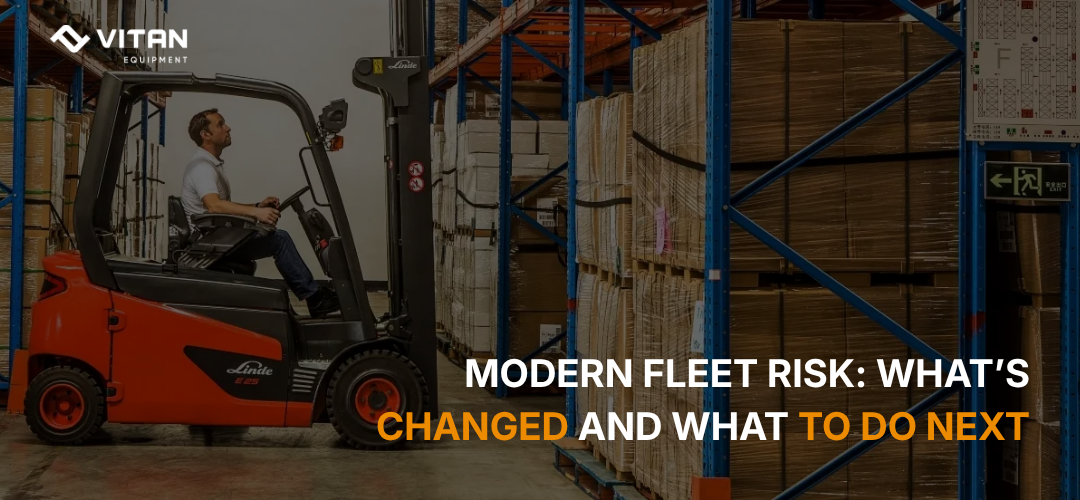
Fleet risk used to be straightforward: keep equipment maintained, train operators, and stay OSHA-compliant. That still matters, but it is no longer the full picture. Aging assets, connected equipment, workforce churn, and more volatile facility conditions have changed what “risk” looks like in 2026.
If your fleet strategy has not evolved with your operation, you may be carrying exposure you cannot see yet.
What’s Changing in Fleet Risk
Fleet risk is shifting fast, which is why a proactive, data-driven approach is becoming the baseline.
Aging Equipment and Unpredictable Maintenance
Planned maintenance helps you get full value from your fleet. The problem is that every asset has a point where service costs and downtime start to climb faster than the value the equipment delivers.
As trucks age beyond their intended service cycles, maintenance becomes less predictable. That drives more unplanned downtime, adds safety risk, and forces teams into reactive decisions at the worst time.
New Technology Brings New Risk
More fleets are relying on telematics, electrification, and automation. These upgrades can improve performance, but they also introduce risk categories that used to sit outside “fleet.”
Connected equipment and telematics can become targets. If a bad actor disrupts systems, impacts access, or compromises data, operations can slow or stop. In other words, parts of your fleet now behave like IT assets, and the risk needs to be managed like IT risk.
Workforce Turnover Changes the Operator Profile
Turnover and rapid onboarding have become normal. That often means a higher percentage of less experienced operators on the floor.
Inexperience increases the likelihood of avoidable impacts, handling errors, and unsafe habits. Those mistakes get expensive quickly, through equipment damage, product loss, and liability exposure.
Facility Environments and Operational Demands Are Less Predictable
Extreme heat, cold, smoke events, flooding, and seasonal volatility force teams to rethink equipment selection, charging strategy, safety protocols, and traffic patterns.
The same route, dock, or aisle can have a different risk profile depending on the month. If your strategy is static, your exposure will not be.
The Hidden Costs of an Outdated Risk Strategy
When your approach lags behind your operation, the costs show up in places leaders often treat as “normal friction”:
- Unplanned downtime and lost productivity
- Higher incident rates and liability exposure
- Rising repair, parts, and replacement costs
- Compliance risk, including OSHA citations and penalties
The hardest part is that these costs compound. A few small gaps turn into a pattern, then a budget line.
Key Questions to Audit Your Current Strategy
Before you rebuild your strategy, pressure-test what you are doing today.
- Does your plan reflect your current fleet mix and utilization patterns?
- Are you proactive on maintenance, or mostly reacting to failures?
- How are you tracking operator behavior, impacts, and near-misses?
- When did you last reassess service coverage, response times, and exclusions?
If any of these questions surfaced gaps, that is useful. It means you have a clear starting point.
How to Update Your Fleet Risk Strategy
Modern fleet risk management is proactive, integrated, and measurable. Here is what that looks like in practice.
Move from Preventive to Predictive Maintenance
Leading teams are using data signals to reduce surprises, not just follow a calendar. That can include monitoring fault codes, usage patterns, battery health, and high-wear components, so you can plan repairs before they become downtime.
The goal is simple: fewer emergency calls, fewer disruptions, and better control of maintenance spend.
Treat Connected Equipment Like a Security Surface
As equipment becomes more connected, basic security controls matter more.
Practical steps include access controls, role-based permissions, strong authentication, secure device policies, and training for the people who interact with systems every day. Cybersecurity is not a separate initiative anymore; it is part of operational resilience.
Unify the Data You Already Have
Many organizations have plenty of data but no single view. Maintenance lives in one place, telematics in another, training records somewhere else.
Bringing key metrics into one dashboard improves decisions and accountability. It also helps you spot correlations, like whether certain operators, shifts, or zones are driving repeated damage.
Build Training Into the Operating Rhythm
With turnover and mixed experience levels, training must be structured and ongoing. Certifications, refreshers, and consistent evaluation help reduce incidents and extend equipment life.
Operator training is not only a safety program. It is a cost-control lever.
Right-Size the Fleet, Then Keep It Right-Sized
Excess equipment is not neutral. Underutilized and aging assets still create maintenance liability, safety exposure, and budget drag.
Routine fleet assessments help confirm that every asset is earning its place. They also surface replacement timing before you are forced into it.
Your Next Move
Fleet risk is not static, and your strategy cannot be either. Aging equipment, connected technology, workforce instability, and climate-driven operating conditions have changed the risk equation.
The question is not whether your risk profile has shifted. It is whether your strategy has kept up.
How Vitan Can Help
Vitan supports fleets with a practical, operations-first approach to risk reduction. From fleet assessments and maintenance planning to operator training support and solutions that fit modern equipment and facility demands, our team helps you identify risk early and reduce preventable costs.
If your operation has changed, your fleet strategy should change with it.
Ready to evaluate your fleet risk strategy? Contact Vitan to schedule a fleet review.